Shipping label
Definition
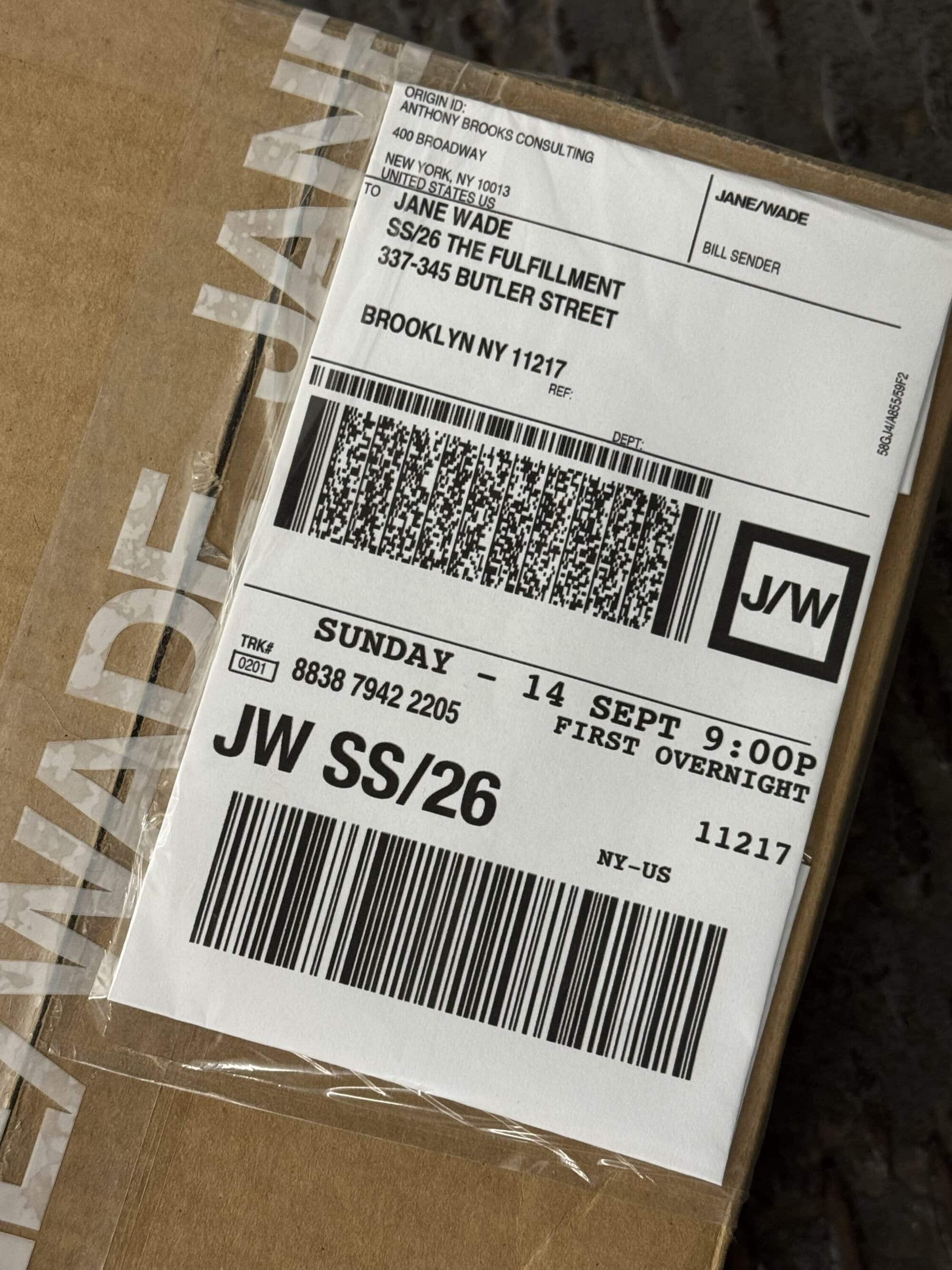
A shipping label is a label typically printed and attached to a shipment that contains the key operational information a carrier needs to identify, route, and deliver a package from sender to recipient.
It carries both human-readable text and machine-readable barcodes, including the ship-from and ship-to addresses and a unique tracking number, so automated sorters and drivers know where the package came from, where it’s going, and how to handle it. Logistics teams often call it a package’s identification card.
What it contains
Most shipping labels hold the same core fields, no matter the carrier: sender and recipient addresses and a unique tracking number encoded as a primary barcode that gets scanned at key checkpoints throughout transit. Depending on the carrier and shipment type, the label may also display weight, dimensions, or package count.
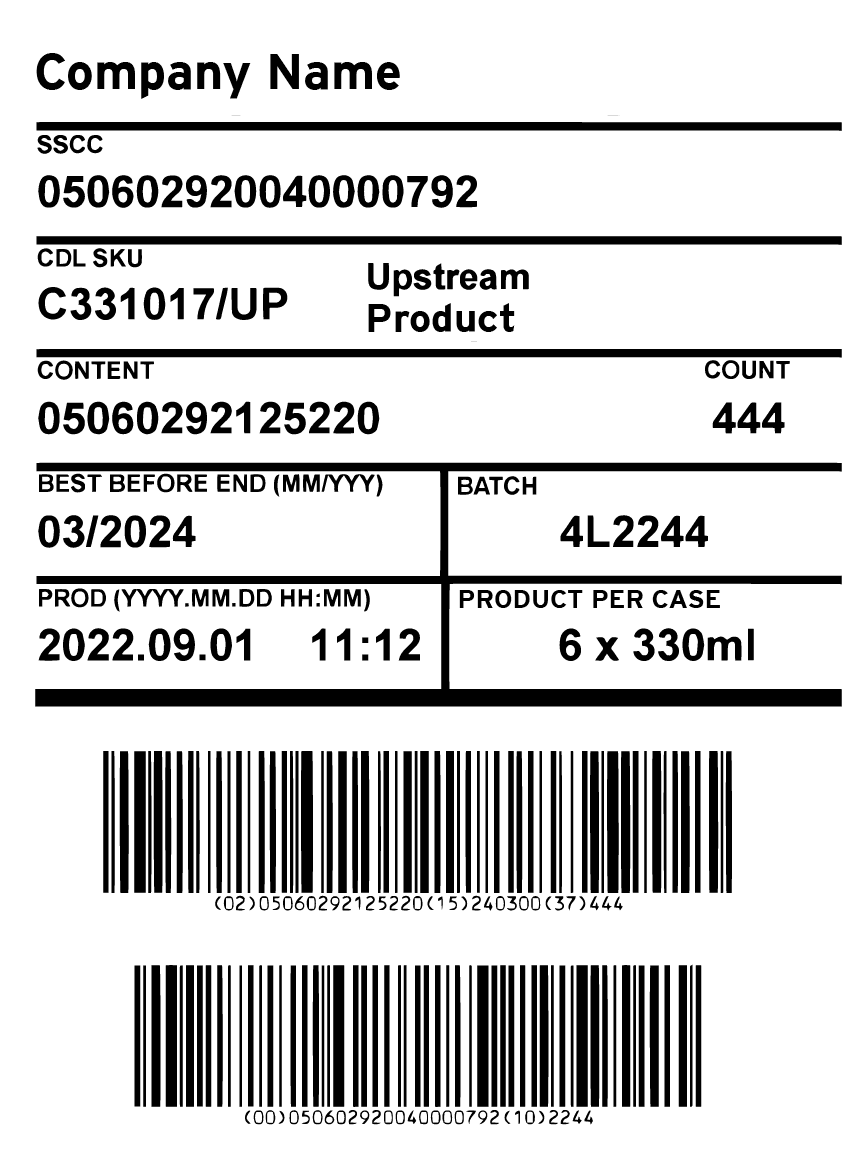
Labels also show the carrier and service level (for example, Ground or 2nd Day Air), and often a 2D sortation barcode like UPS’s MaxiCode that encodes the destination ZIP, country, and service class. Many add billing codes, reference fields (PO or order numbers), and special-handling marks. Many pallet shipments, particularly in retail and manufacturing supply chains, use a separate GS1-128 label built around an 18-digit SSCC barcode.
Where it’s used
Shipping labels show up anywhere physical goods move: manufacturing plants, distributors, retailers, e-commerce fulfillment centers, and third-party logistics (3PL) warehouses.
They’re handled by shipping and receiving clerks, fulfillment associates, and warehouse operators, with finance later using label data like tracking numbers and weights to reconcile freight costs. The label is created at the ship-from location, typically after order and shipment details are finalized, and stays with the parcel through pickup, sorting, transit, and delivery.
How it’s used
When an order is ready, the shipper’s system gathers the address, weight, and service choice and sends it to the shipping software, which generates the label and encodes the tracking number and barcodes. Most high-volume operations use a direct thermal or thermal transfer printer to print it, and a worker fixes it to the package without covering the barcodes. From there it’s scanned at carrier acceptance, at each sorting hub, in transit, and at delivery.
Example
A standard USPS Priority Mail label shows the mail-class icon, the sender and recipient addresses with ZIP+4, and an Intelligent Mail Package Barcode (IMpb). A pallet into a retailer’s DC instead carries a GS1-128 logistics label built around the 18-digit SSCC barcode that identifies that exact unit load.
Visual — anatomy of a label

Types of shipping labels
Standard domestic label. The everyday parcel label for domestic shipments (USPS Ground, UPS Ground, FedEx Home Delivery). Shown in the anatomy hero above.
Prepaid or return label. Postage already paid or charged back to the sender, so a customer can return a package. Common in retail and e-commerce.
International label. Carries customs information such as a commodity description, declared value, country of origin, and HS codes—shown on the label itself or transmitted electronically. Missing or wrong data risks customs holds.

Pallet or SSCC label. A GS1-128 label for unit loads (pallets, containers) built around the 18-digit SSCC barcode. Often required by large retailers.
Special-handling marks. Not a separate label, but added legends like “Keep Refrigerated” or hazmat pictograms that signal safety and compliance.

Best practices
Use the flat-surface rule. Place the label on the largest flat side; never fold a barcode over an edge. A wrapped barcode breaks machine scanning.
Pick durable label stock. Direct thermal or tear-resistant polyester holds up to moisture and friction. Standard office paper is less durable and can tear, wrinkle, or become unreadable in transit.
Keep the scan zone clear. Avoid covering the barcode with tape unless carrier guidelines explicitly allow it; wrinkles or glare can also interfere with scanning. If a scanner can’t read it, the package stalls.
Frequently asked questions
Is a shipping label the same as a packing slip?
No. A shipping label goes on the outside and talks to the carrier (addresses, barcode, tracking). A packing slip goes inside and talks to the buyer (items, quantities, SKUs). One handles delivery, the other verifies contents.
Is a shipping label the same as a mailing label?
No. A basic mailing label often contains only addressing information, whereas a shipping label usually includes carrier-specific tracking, routing, and service information.
What information must a shipping label include?
Typically: sender and recipient addresses, carrier and service level, a unique tracking number as a scannable barcode, and depending on the carrier, package weight. International shipments add customs details and HS codes.
What are the different types of shipping labels?
Standard domestic, prepaid or return, international (with customs data), and pallet or SSCC labels for unit loads, plus special-handling marks when contents require them.
Why do international shipments require HS codes?
HS codes tell customs what’s in the package so duties can be assessed and it can clear. Missing or wrong codes can hold the shipment at the border, adding fees or causing a return.


Turn documents into decisions.
See how Docxster gets you from inbox to insight in minutes, not days. Bring your toughest workflow — we'll show you what it looks like solved.