
Your brokers file thousands of lines under your importer number. Docxster audits every one of them against the commercial invoice, the packing list, the certificates, and your own parts data, so errors are found before the duty is paid, while they can still be corrected.
problem 01
You don’t know what your brokers actually filed, line by line
Every entry carries your importer number, so you answer for it, even though the broker decides what goes on each line. Your brokers each work from their own habits and saved mappings, and although the line-level detail is available in your ES003 report, the returned 7501 is often the first and last place anyone on your side sees it.
problem 02
You check a sample and call it coverage
A real audit means opening the 7501, the commercial invoice, the packing list, and the certificates side by side and walking through them line by line. With thousands of entries, millions of lines, and a limited team, that cannot be done for every line, so your team checks a sample and hopes the rest look the same.
problem 03
Chapter 99 moves faster than your brokers do
The base HTS on most of your parts has been right for years. The tariffs that change regularly are provisional ones, such as Sections 232 and 301, and those changes arrive faster than your brokers can update their templates or you can push each change to every broker you use.
problem 04
Your parts data is scattered, and nobody owns it
Ask for the current HTS on a part and the answer could come from your ERP, a set of spreadsheets, or a broker’s saved mappings. With the data fragmented across sources that each have a different owner, there is no single, accountable record to audit a filing against.
problem 05
The records are your obligation, but your brokers hold them
You are required to keep five years of entry records, yet the full packet for each entry usually lives in a broker’s archive or is buried in your email. That works until you switch brokers, or until a CF‑28 arrives about an entry from two years ago and you find yourself asking someone else’s system for your own records.
problem 06
Duty is paid before anyone reconciles it
The monthly statement is paid before anyone has reconciled the ES003 against REV-102 and the entry lines behind it. Once an entry liquidates, a post-summary correction is no longer an option: underpayments become prior disclosures, and overpayments that nobody caught are often written off.
Every line of every entry, audited
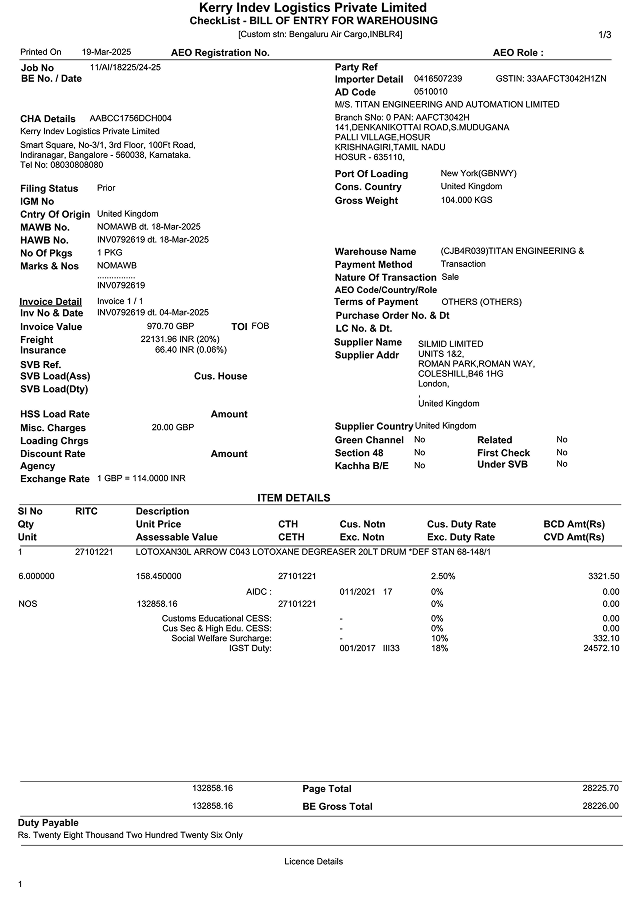
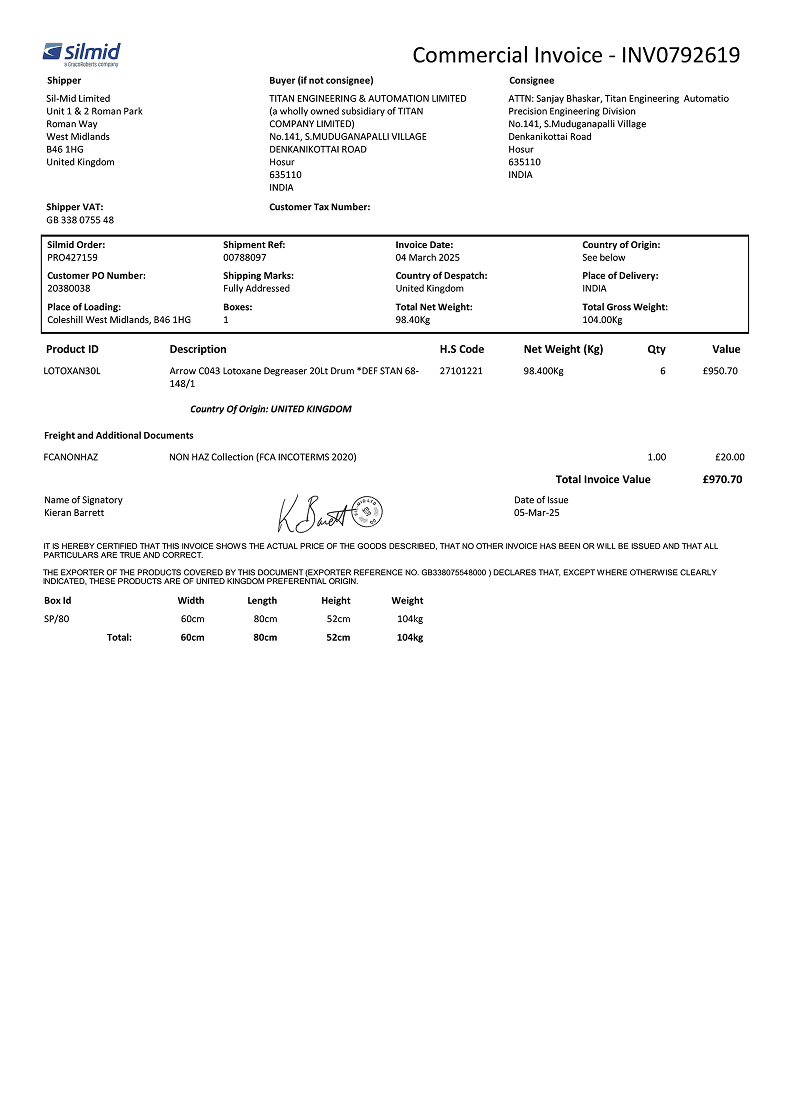
When a broker files an entry, Docxster places the 7501 next to its commercial invoice, packing list, and bill of lading, then compares them line by line, the way your team would if it had the time. Instead of reading 7501s all day, your team sees only the lines where something doesn’t agree.
One parts table, with every filing audited against it
Docxster brings your parts data from your ERP, your spreadsheets, and your brokers’ saved mappings into one table that your team owns. The HTS, origin, and description on every filed line are then audited against that record, while classification stays with your team.
Give every broker clear, documented feedback
Findings are grouped by the broker who filed them, so you can see where each broker needs guidance and bring specific, documented feedback to your next review. Corrections go back to the broker with the supporting documents attached.
Every entry and its documents, on record for five years
The full packet for every entry lives in one place, indexed and owned by you rather than by whichever broker filed it. When a CF‑28, a CF‑29, or an audit arrives, you search by entry number, part number, or HTS, and every related document is already there.
Pay the right duty on every monthly statement
Before the monthly statement is paid, Docxster reconciles the ES003 against REV-102 and the entries you have already audited, so you neither overpay nor underpay. Any variance is explained before the duty leaves your account.

Built for the people whose names are on every entry
What Docxster takes off their plate

Director of Trade Compliance
Docxster handles
Docxster audits every filing line by line and keeps the full packet for each entry, so you no longer sign off on the strength of a sample.
Stays with you
You still set classification policy and the reasoning behind it, approve every correction, and own every answer that goes to CBP.

Trade Compliance Manager

Customs Compliance Analyst

Import Manager and Global Trade Manager

Legal and Finance Partners


"/><stop offset="1" stop-color="rgb(183, 17, 196)"/></linearGradient></defs><path d="M 19.833 0 C 20.478 0 21 0.522 21 1.167 L 21 5.55 L 10.501 16.049 L 10.494 20.994 L 15.448 21.001 L 21 15.449 L 21 22.167 C 21 22.811 20.478 23.333 19.833 23.333 L 1.167 23.333 C 0.522 23.333 0 22.811 0 22.167 L 0 1.167 C 0 0.522 0.522 0 1.167 0 Z M 21.908 7.942 L 23.558 9.592 L 14.483 18.667 L 12.831 18.664 L 12.833 17.017 Z M 10.5 11.667 L 4.667 11.667 L 4.667 14 L 10.5 14 Z M 14 7 L 4.667 7 L 4.667 9.333 L 14 9.333 Z" fill="url(%23b9rqnT9Tz-941223563-linear-gradient)" height="23.333329999999997px" id="b9rqnT9Tz" transform="translate(5.5 4.333)" width="23.557800192260743px"/></svg>)
"/><stop offset="1" stop-color="rgb(183, 17, 196)"/></linearGradient><linearGradient id="Ttdmkdnii-1235068018-linear-gradient" x1="0.49751243781094523" x2="0.5024875621890548" y1="0" y2="1"><stop offset="0" stop-color="rgb(245, 245, 245)"/><stop offset="1" stop-color="rgba(245, 245, 245, 0.02)"/></linearGradient></defs><path d="M 21.447 5.447 L 25.954 5.447 L 21.106 0.599 L 21.106 5.106 C 21.106 5.297 21.256 5.447 21.447 5.447 Z M 5.447 3.745 L 5.447 12.255 L 1.021 12.255 C 0.463 12.255 0 12.718 0 13.277 C 0 13.835 0.463 14.298 1.021 14.298 L 30.979 14.298 C 31.537 14.298 32 13.835 32 13.277 C 32 12.718 31.537 12.255 30.979 12.255 L 26.553 12.255 L 26.553 7.489 L 21.447 7.489 C 20.14 7.489 19.064 6.414 19.064 5.106 L 19.064 0 L 9.191 0 C 7.122 0 5.447 1.675 5.447 3.745 Z M 26.553 22.809 L 26.553 16.34 L 5.447 16.34 L 5.447 22.809 C 5.447 24.878 7.122 26.553 9.191 26.553 L 22.808 26.553 C 24.878 26.553 26.553 24.878 26.553 22.809 Z" fill="url(%23Z0UwE2VbB-1235068018-linear-gradient)" height="26.553210232543943px" id="Z0UwE2VbB" transform="translate(0 2.723)" width="32px"/><path d="M 21.169 0 L 21.169 7.098 C 20.635 8.727 19.601 9.541 17.798 10 L 4.137 10 C 1.998 10 0 8.783 0 7.098 L 0 0 Z" fill="url(%23Ttdmkdnii-1235068018-linear-gradient)" height="10px" id="Ttdmkdnii" transform="translate(5.418 19)" width="21.16913px"/></svg>)
"/><stop offset="1" stop-color="rgb(183, 17, 196)"/></linearGradient><linearGradient id="QEUvrDGZY-2003416401-linear-gradient" x1="0" x2="1" y1="0.4975124378109453" y2="0.5024875621890547"><stop offset="0" stop-color="rgb(252, 145, 50)"/><stop offset="1" stop-color="rgb(183, 17, 196)"/></linearGradient><linearGradient id="YvJNLHwEx-2003416401-linear-gradient" x1="0" x2="1" y1="0.4975124378109453" y2="0.5024875621890547"><stop offset="0" stop-color="rgb(252, 145, 50)"/><stop offset="1" stop-color="rgb(183, 17, 196)"/></linearGradient></defs><path d="M 0.326 4.636 L 4.636 4.636 L 0 0 L 0 4.311 C 0 4.493 0.143 4.636 0.326 4.636 Z" fill="url(%23ydIBowORO-2003416401-linear-gradient)" height="4.63631px" id="ydIBowORO" transform="translate(19.235 2.573)" width="4.636400000000002px"/><path d="M 7.651 15.302 C 3.426 15.302 0 11.877 0 7.651 C 0 3.426 3.426 0 7.651 0 C 11.877 0 15.302 3.426 15.302 7.651 C 15.302 11.877 11.877 15.302 7.651 15.302 Z M 6.888 10.712 L 12.298 5.301 L 11.216 4.219 L 6.888 8.548 L 4.724 6.383 L 3.642 7.466 Z" fill="url(%23QEUvrDGZY-2003416401-linear-gradient)" height="15.3024px" id="QEUvrDGZY" transform="translate(12.439 14.698)" width="15.302499999999998px"/><path d="M 13.024 4.884 C 13.024 6.134 14.053 7.162 15.302 7.163 L 20.186 7.163 L 20.186 11.835 C 18.88 11.165 17.4 10.785 15.831 10.785 C 10.549 10.785 6.267 15.067 6.267 20.349 C 6.267 22.201 6.795 23.93 7.707 25.395 L 3.582 25.395 C 1.602 25.395 0 23.794 0 21.814 L 0 3.581 C 0 1.602 1.602 0 3.582 0 L 13.024 0 Z" fill="url(%23YvJNLHwEx-2003416401-linear-gradient)" height="25.3951px" id="YvJNLHwEx" transform="translate(4.259 2)" width="20.18625px"/></svg>)
"/><stop offset="1" stop-color="rgb(183, 17, 196)"/></linearGradient><linearGradient id="XGXtn7mf8-383846215-linear-gradient" x1="0" x2="1" y1="0.4975124378109453" y2="0.5024875621890547"><stop offset="0" stop-color="rgb(252, 145, 50)"/><stop offset="1" stop-color="rgb(183, 17, 196)"/></linearGradient><linearGradient id="HzlzY7ADk-383846215-linear-gradient" x1="0" x2="1" y1="0.4975124378109453" y2="0.5024875621890547"><stop offset="0" stop-color="rgb(252, 145, 50)"/><stop offset="1" stop-color="rgb(183, 17, 196)"/></linearGradient></defs><path d="M 11.85 0 C 10.996 1.351 10.5 2.951 10.5 4.667 C 10.5 5.912 10.761 7.095 11.23 8.167 L 0 8.167 L 0 5.834 C 0 2.613 2.611 0 5.833 0 Z" fill="url(%23QLq0aEFqc-383846215-linear-gradient)" height="8.167200000000001px" id="QLq0aEFqc" transform="translate(2.875 18.333)" width="11.8501px"/><path d="M 7 0 C 10.866 0 14 3.134 14 7 C 14 10.866 10.866 14 7 14 C 3.134 14 0 10.866 0 7 C 0 3.134 3.134 0 7 0 Z" fill="url(%23XGXtn7mf8-383846215-linear-gradient)" height="14px" id="XGXtn7mf8" transform="translate(5.208 2)" width="14.000039999999998px"/><path d="M 7 14 C 3.134 14 0 10.866 0 7 C 0 3.134 3.134 0 7 0 C 10.866 0 14 3.134 14 7 C 14 10.866 10.866 14 7 14 Z M 6.302 9.8 L 11.252 4.85 L 10.262 3.86 L 6.302 7.82 L 4.322 5.84 L 3.332 6.83 Z" fill="url(%23HzlzY7ADk-383846215-linear-gradient)" height="14px" id="HzlzY7ADk" transform="translate(15.125 16)" width="14px"/></svg>)


Questions you’ll probably ask
before you book a demo
Why start from what was filed, not from our parts data?
Your parts data tells you what should have been filed, but it can’t tell you what your brokers actually filed, which Chapter 99 layers landed on each line, or what the monthly statement is about to pull. That’s why Docxster starts with the filing itself and then audits it against your parts data.
Our broker already audits their own work. Why do we need Docxster?
A broker’s audit is the broker checking their own work. That is useful, but it is not your audit. Docxster gives you an audit on your side, against your own parts data and your own records.
Do you replace our brokers or file entries?
No. Docxster isn’t an ABI filer and doesn’t replace your brokers; it works alongside them and audits what they file on your behalf. On request, Docxster can also connect you to the expert customs brokers already on the Docxster platform.
Do you cover ECCN or export controls?
No. Docxster covers import entries filed with CBP. ECCN and export licensing fall under a separate regime, administered by BIS under the EAR.
How much work is it for my team?
Setup begins with one session to agree on your rules, which we document in a shared SOP. We then review the first runs with you, and from that point on, your team looks only at the exceptions.
Where does our data live?
Your data is stored on AWS servers in the US and never leaves the US. Docxster is ISO, GDPR, and SOC 2 compliant, and we share our security documentation with your IT security team for review.
What happens in the demo?
The demo takes 25 minutes. You bring a few entries and their documents, and we audit them line by line while you watch. If it isn’t useful, you’ll know quickly.
See what auditing every entry actually looks like
Bring a few of your own entries and their documents to a 25-minute call, and we’ll audit them line by line, the way your team would. By the end, you’ll have seen what checking every entry actually looks like, and you’ll know quickly whether it’s worth it.


